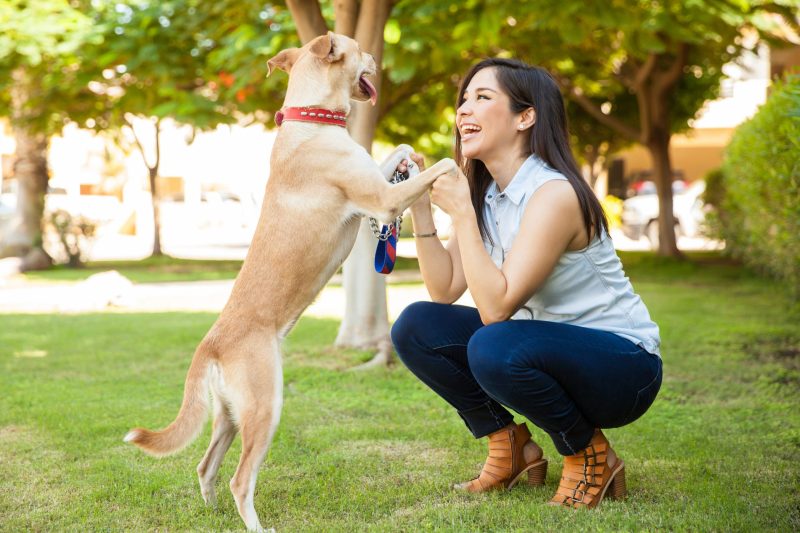
A dog may respond beautifully to one family member yet seem distracted or uninterested when someone else gives the same cue. This is common when one person handles most feeding, walking, practice, and routines. The dog is not being stubborn. More often, the dog has learned that words, gestures, tones, and expectations matter most when they come from one familiar person.
For families in Peoria, AZ, consistent dog training can create clearer communication at home. That shared clarity supports safer daily interactions. The goal is not to make every person sound identical. It is to help the dog understand that the same cue has the same meaning, no matter who gives it.
Dogs Learn Patterns, Not Just Words
Dogs notice far more than the word being spoken. They also watch posture, hand movements, expressions, timing, location, and the chance of a reward. One person may say “sit” while standing with a hand near the chest. Another may bend forward, repeat the cue, or wave both hands.
To the dog, these can look like different requests.
Successful dog training begins with making each cue easy to recognize. Family members should agree on the word, hand signal, and expected response. They should avoid repeating the cue. Saying it once, pausing, and helping the dog succeed creates a clearer learning pattern.
Different Rules Create Mixed Messages
A dog may listen to one person because that person consistently follows through. Another family member may allow jumping, begging, rushing through doors, or ignoring a cue. Over time, the dog learns which expectations are firm and which are optional.
Household rules should be simple for everyone to follow. Families can decide where the dog may rest, how greetings should happen, what behavior is expected before meals, and which doors require a pause. Shared routines reduce confusion.
Consistency does not mean being harsh. It means making desired behavior predictable and rewarding. Calm repetition, clear cues, and timely rewards help the dog understand what works.
Practice With One Person at a Time
When several people give cues at once, the dog may become overwhelmed or focus only on the most familiar voice. It is usually better to practice with one person at a time.
The person the dog responds to best can demonstrate the routine first. Then another family member can repeat the same setup with the same cue and reward timing. Early practice should happen in a quiet room with few distractions.
Once the dog responds reliably, the family can practice in different rooms, near the backyard, and during household activity. This teaches the dog that the cue applies in more than one situation.
Build Value With Every Family Member
Dogs often respond fastest to the person linked with rewarding activities. Other family members can become more relevant by helping with feeding, walks, play, enrichment, and short training sessions.
Rewards do not always need to be food. Praise, toys, yard access, sniffing time, or a favorite activity can reinforce good choices. The important point is that each family member creates positive, consistent experiences.
Short practice periods are more productive than long sessions. A few focused minutes can build confidence without becoming tired or frustrated.
Avoid Turning Cues Into Background Noise
Repeating a cue can teach the dog that the first request does not matter. Instead of saying the word five times, give the cue once and allow a moment for the dog to respond.
If the dog does not respond, the setting may be distracting, the cue may be unclear, or the dog may need guidance. Moving closer, reducing distractions, or returning to an easier exercise can help.
Family members should avoid using cues casually when they cannot follow through. Clear communication becomes stronger when each cue has a consistent meaning.
When Individual Guidance Can Help
Some households struggle because each person has developed different habits with the dog. In these cases, private dog training can help family members practice together in the dog’s home. A certified dog trainer can observe differences in tone, timing, movement, and follow-through affecting the dog’s response.
Individual guidance also helps when children, older adults, or family members with limited mobility need adjusted techniques. The objective is to create a plan everyone can use safely and comfortably.
Create One Shared Language at Home
A dog that listens to only one person is responding to familiar patterns, not showing favoritism. Families can improve reliability by using the same cues, setting shared expectations, practicing individually, and rewarding successful responses.
Progress may be gradual, when inconsistent habits have developed. Patient practice helps the dog understand that every family member communicates clearly and predictably.
For support building a consistent household routine, schedule an in-home private lesson focused on communication, everyday cues, and practical family participation.
Louis Shea
Louis Shea, an experienced wordsmith, channels his passion for knowledge into creating compelling articles and blogs across a broad spectrum of subjects. From the realms of technology and science to the nuances of lifestyle and culture, he navigates diverse topics with precision and enthusiasm, offering invaluable insights to his audience. With a background in Journalism and a wealth of professional experience, Louis approaches each piece with a steadfast commitment to accuracy and lucidity, ensuring his readers receive credible and comprehensive information. His writing style effortlessly blends professionalism with accessibility, adept at making intricate concepts accessible to readers from all walks of life. Whether he's dissecting the latest breakthroughs in AI or unraveling the mysteries of ancient civilizations, Louis possesses a unique ability to distill complex information into engaging content that both educates and entertains. Constantly attuned to emerging trends and advancements, Louis Shea remains a trusted authority in the digital sphere, enriching the online community with his insightful perspectives and captivating narratives.