In brief:
• Emergency water damage restoration in Joliet IL follows a structured process: inspection, extraction, drying, and repair.
• Fast response within the first 24-48 hours limits mold growth and structural damage.
• Professional-grade equipment and moisture monitoring are what separate a thorough cleanup from a surface-level fix.
Professional water damage cleanup follows a clear sequence: stopping the water source, extracting standing water, drying structural materials, and repairing or restoring the affected areas. Knowing these steps helps homeowners judge whether a contractor is doing the job properly or cutting corners. To see how a professional team handles each stage, Learn More About Parkside Restoration.
When a pipe bursts, a basement floods, or a roof leak spreads across a ceiling, the clock starts immediately. Emergency Water Damage Restoration in Joliet IL typically begins with a rapid on-site assessment to identify the water source, categorize contamination level, and determine which materials can be saved versus replaced. This initial step shapes every decision that follows, from equipment selection to the drying timeline.
Why the First Few Hours Matter Most
Water does not sit still. It wicks into drywall, soaks into subfloors, and seeps behind baseboards within hours of a leak or flood event.
• Porous materials like carpet padding and drywall begin absorbing moisture almost immediately.
• Untreated moisture creates conditions for mold spores to activate, often within 24 to 48 hours.
• Structural wood can swell, warp, or weaken the longer it stays saturated.
According to the Environmental Protection Agency’s mold guidance, mold growth requires only moisture, an organic food source, and time, which is why fast extraction and drying are treated as urgent rather than optional. Delaying cleanup by even a day can shift a simple drying job into a more invasive remediation project.
Core Steps in a Professional Cleanup Process
A structured restoration job generally moves through four distinct phases. Skipping or rushing any one of these increases the risk of hidden moisture and secondary damage later.
1. Inspection and water categorization. Technicians assess the source and classify the water as clean, gray, or black to determine safety protocols and disposal needs.
2. Water extraction. Submersible pumps and industrial wet vacuums remove standing water from floors, carpets, and crawl spaces.
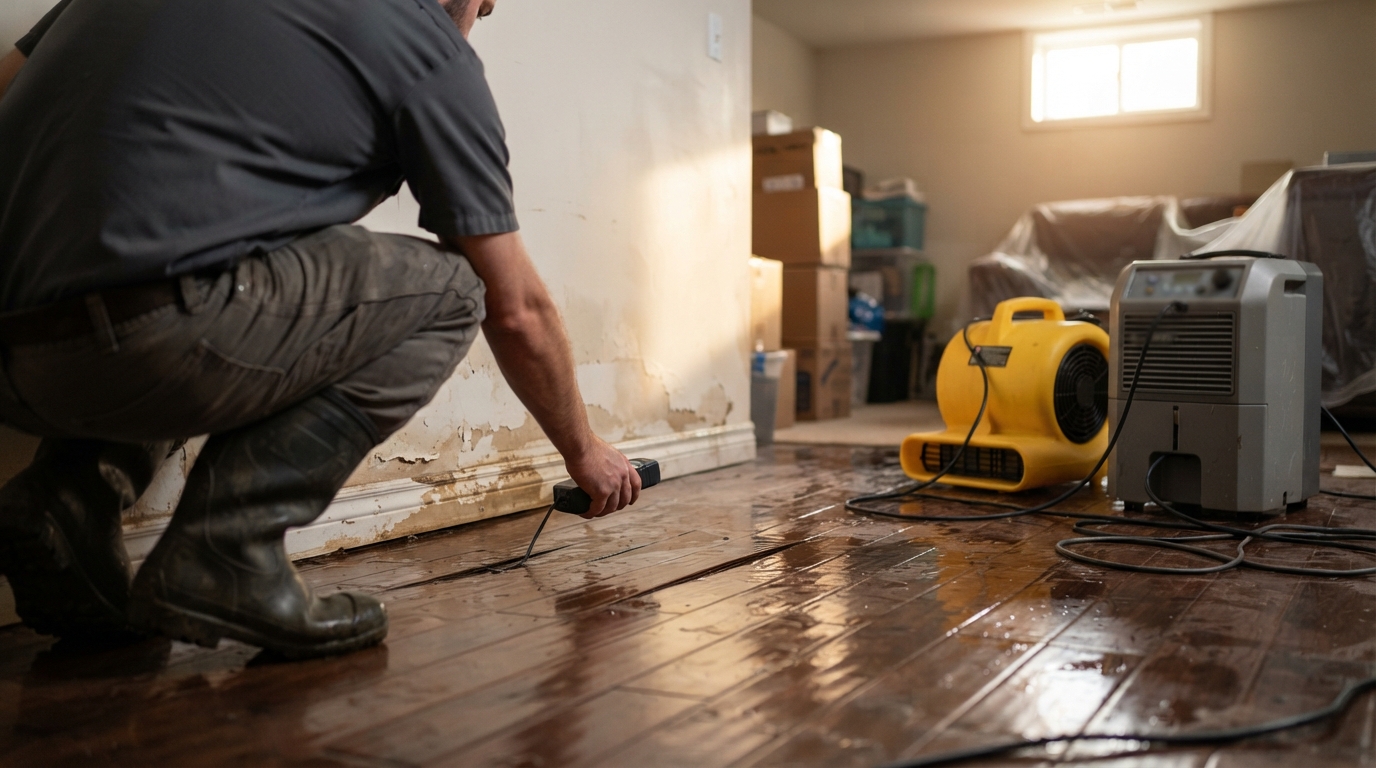
3. Drying and dehumidification. Air movers and commercial dehumidifiers reduce humidity and pull residual moisture from walls, subfloors, and framing.
4. Monitoring and repair. Moisture meters track progress until materials reach normal readings, followed by repairs to drywall, flooring, or trim as needed.
Each phase depends on the one before it. Extraction without proper drying leaves hidden dampness inside wall cavities, which can lead to musty odors or mold weeks later even if the surface looks dry.
Equipment and Techniques That Make a Difference
Not all drying setups are equal, and the tools used often determine how long a home stays disrupted.
| Approach | Typical Use Case | Drying Speed |
| Household fans only | Minor surface spills | Slow, often incomplete |
| Basic dehumidifier | Small, contained areas | Moderate |
| Industrial air movers and commercial dehumidifiers | Whole-room or multi-room flooding | Fast, more thorough |
| Moisture mapping with meters | Hidden moisture in walls/subfloors | Confirms true dryness |
Professional-grade air movers and dehumidifiers are built to handle volume and speed that consumer equipment cannot match. Moisture meters add a layer of accountability by confirming that materials have actually returned to safe levels, rather than relying on visual inspection alone.
What Homeowners Should Watch For During Cleanup
A thorough cleanup should include clear communication and documentation, not just equipment running in the background.
• Written or photographic documentation of damage before work begins, useful for insurance claims.
• Daily or regular moisture readings shared with the homeowner as drying progresses.
• A clear explanation of which materials are salvageable versus which need replacement.
• A final walkthrough confirming moisture levels are back to normal before equipment is removed.
Homeowners should feel comfortable asking a restoration technician to explain readings or show documentation. Transparency during this phase is one of the clearest signs of a well-run restoration job.
Frequently Asked Questions
How quickly should water damage cleanup start after a flood or leak? Cleanup should begin as soon as possible, ideally within hours, since moisture absorption and mold risk increase significantly within the first one to two days.
Can homeowners dry out a flooded room themselves? Minor spills on hard surfaces can sometimes be managed with fans and a wet vacuum, but saturated carpet, drywall, or subflooring usually requires commercial-grade drying equipment to fully resolve.
How long does professional drying typically take? Drying time varies by the size of the affected area and the materials involved, but most jobs are monitored with moisture meters until readings confirm materials are fully dry rather than relying on a fixed schedule.
What is the difference between water extraction and water damage restoration? Extraction refers specifically to removing standing water, while restoration covers the full process, including drying, monitoring, and repairing or replacing damaged materials.
Water damage cleanup works best when it follows a clear, verified process rather than guesswork. Homeowners dealing with a leak, flood, or burst pipe in the Joliet area can review service details through Find the Parkside Restoration Business Listing on Google Maps to see hours, service area, and customer feedback before reaching out for an assessment.
Louis Shea
Louis Shea, an experienced wordsmith, channels his passion for knowledge into creating compelling articles and blogs across a broad spectrum of subjects. From the realms of technology and science to the nuances of lifestyle and culture, he navigates diverse topics with precision and enthusiasm, offering invaluable insights to his audience. With a background in Journalism and a wealth of professional experience, Louis approaches each piece with a steadfast commitment to accuracy and lucidity, ensuring his readers receive credible and comprehensive information. His writing style effortlessly blends professionalism with accessibility, adept at making intricate concepts accessible to readers from all walks of life. Whether he's dissecting the latest breakthroughs in AI or unraveling the mysteries of ancient civilizations, Louis possesses a unique ability to distill complex information into engaging content that both educates and entertains. Constantly attuned to emerging trends and advancements, Louis Shea remains a trusted authority in the digital sphere, enriching the online community with his insightful perspectives and captivating narratives.


