Key takeaway:
- Custom embroidery creates stitched designs that resist fading, cracking, and wear far longer than many printed alternatives, making it a practical choice for uniforms, caps, and corporate apparel.
- Thread weight, stitch density, and fabric compatibility determine how long an embroidered logo holds its shape and color.
- Local embroidery providers can offer faster turnaround and more consistent quality control than large-batch overseas vendors.
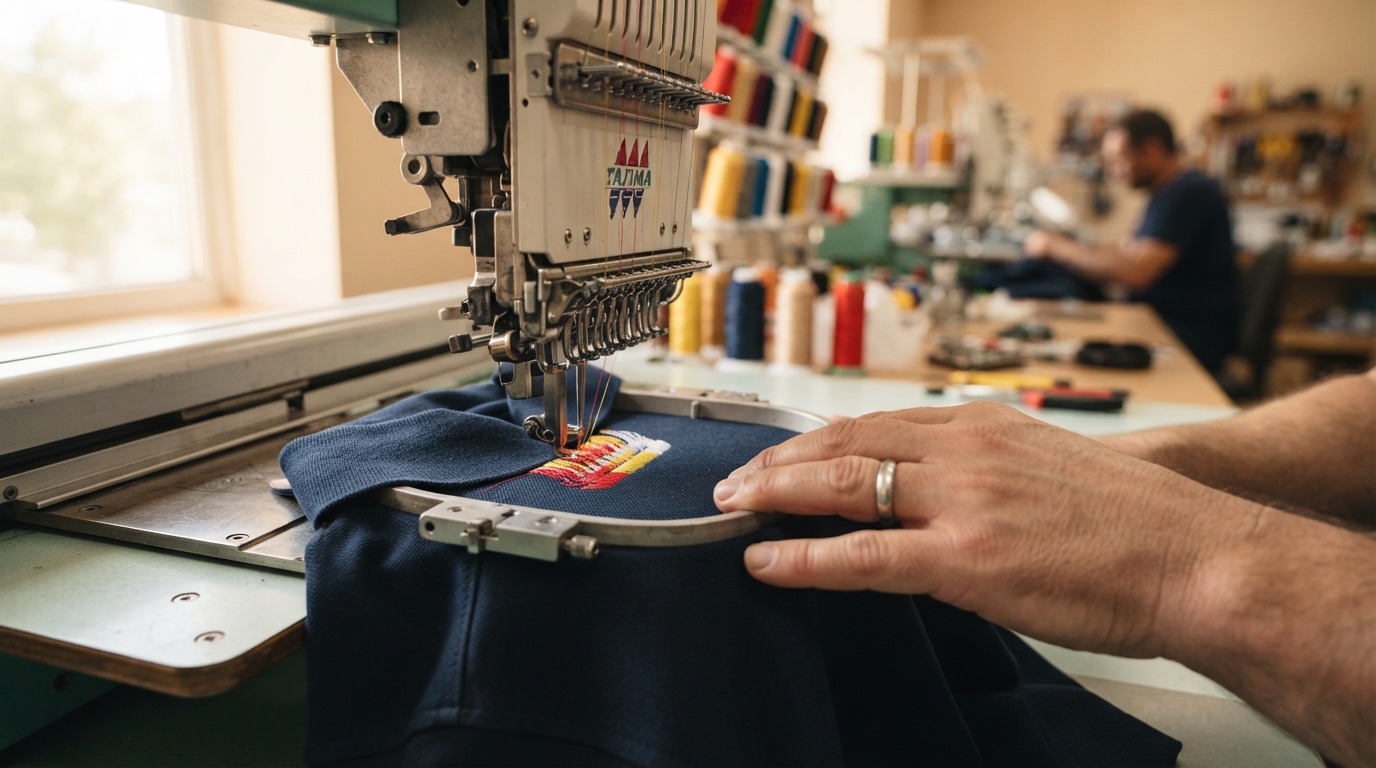
Businesses searching for a logo application that survives repeated washing, sun exposure, and daily wear are usually looking for one answer: custom embroidery stitched directly into the fabric rather than printed on top of it. Unlike heat transfers or screen prints, embroidered thread becomes part of the garment’s structure, which is why it remains the standard choice for uniforms, outerwear, and headwear that need to look sharp after months of use.
The appeal of stitched branding over printed branding comes down to physics as much as aesthetics. Thread fibers are woven into the weave of the fabric, so the design cannot peel, crack, or scratch off the way plastisol or vinyl prints sometimes can. That structural advantage is a primary reason embroidery remains the default for corporate apparel, team uniforms, and promotional headwear across many industries KT Apparel in DFW.
What Makes Embroidered Branding More Durable
Several technical factors influence how long a stitched design holds up under regular wear:
• Thread material : Polyester threads resist fading, bleach, and abrasion better than natural fibers, which is why most commercial embroidery relies on polyester rather than cotton for logo work.
• Thread weight : Industry practice centers on 40-weight thread paired with standard needle sizes, a combination that balances strength with clean stitch definition on most commercial machines, according to one embroidery thread weight guide.
• Stitch density : Higher stitch counts produce sharper detail and more durable coverage, particularly for small logos or fine lettering, though density must be balanced against fabric flexibility to avoid stiffness.
• Fabric compatibility : Heavier fabrics such as twill, canvas, and denim hold stitching more securely than thin or stretch materials, which can pucker under dense embroidery.
Embroidery vs. Screen Printing for Apparel Branding
Choosing between stitched and printed branding depends on the garment, the design, and how the apparel will be used.
|
Factor |
Custom Embroidery |
Screen Printing |
|
Durability |
High; resists cracking and fading over repeated washes |
Moderate; prone to cracking over time |
|
Best Use |
Polos, jackets, caps, uniforms |
T-shirts, event giveaways, large graphics |
|
Texture |
Raised, tactile finish |
Flat, smooth finish |
|
Design Detail |
Best for logos, text, simple shapes |
Best for photorealistic or multi-color art |
Neither method is universally better. Many apparel programs use both, applying embroidery to structured garments like polos and outerwear while reserving screen printing for soft cotton tees or short-term event shirts.
Fabric and Garment Considerations Before You Order
Not every fabric accepts embroidery the same way. Lightweight or loosely woven materials can pucker under stitching unless backed properly with stabilizer, while heavier weaves generally hold a design cleanly without reinforcement. Garment type also shapes the decision:
1. Polos and button-downs typically take left-chest logos well due to their stable, woven construction.
2. Jackets and outerwear support larger designs, including full-back logos, because of their thicker fabric base.
3. Caps and trucker hats require specialized hooping equipment to stitch curved surfaces without distortion.
4. Bags and accessories often need extra stabilizer backing since many are made from thinner or stretch-prone material.
Why Local Production Matters for Quality Control
Working with a nearby embroidery provider allows for sample review, faster adjustments, and direct communication about thread colors or placement before a full order runs. KT Apparel, a family-owned provider serving the Dallas-Fort Worth metroplex, works with businesses, schools, and organizations on embroidered polos, jackets, caps, and company merchandise. The company’s Google Business Profile outlines its embroidery and broader custom apparel services for local clients seeking stitched branding on uniforms and promotional gear.
Frequently Asked Questions
Does embroidery work on all fabric types? Embroidery performs best on stable, medium-to-heavyweight fabrics like cotton twill, canvas, and polyester blends. Thin, stretchy, or loosely woven materials generally require stabilizer backing to prevent puckering or distortion.
How long does embroidered branding typically last compared to printing? Because thread is stitched into the fabric rather than applied on top, embroidered logos generally resist cracking, peeling, and fading longer than heat-transfer or screen-printed designs, particularly through repeated washing.
Is embroidery a good fit for small or detailed logos? Small text and fine detail can be challenging for embroidery since stitch width has physical limits. Simplified logo versions are often recommended for very small applications like cap fronts or sleeve embroidery.
What apparel items are most commonly embroidered? Polos, jackets, caps, and corporate uniforms are among the most common embroidered items because their fabric structure holds stitching cleanly and the finished look reads as professional branding.
Selecting an apparel branding method is ultimately a question of how the garment will be used and how long it needs to look sharp. For uniforms, outerwear, and headwear that face daily wear, stitched designs tend to outperform printed alternatives in long-term appearance. Businesses evaluating their options can review current embroidery capabilities directly with KT Apparel to match garment type, fabric, and design detail to the right production method.
Louis Shea
Louis Shea, an experienced wordsmith, channels his passion for knowledge into creating compelling articles and blogs across a broad spectrum of subjects. From the realms of technology and science to the nuances of lifestyle and culture, he navigates diverse topics with precision and enthusiasm, offering invaluable insights to his audience. With a background in Journalism and a wealth of professional experience, Louis approaches each piece with a steadfast commitment to accuracy and lucidity, ensuring his readers receive credible and comprehensive information. His writing style effortlessly blends professionalism with accessibility, adept at making intricate concepts accessible to readers from all walks of life. Whether he's dissecting the latest breakthroughs in AI or unraveling the mysteries of ancient civilizations, Louis possesses a unique ability to distill complex information into engaging content that both educates and entertains. Constantly attuned to emerging trends and advancements, Louis Shea remains a trusted authority in the digital sphere, enriching the online community with his insightful perspectives and captivating narratives.