Many sports require athletes to repeat the same movement on one side of the body. A baseball player throws and bats from a preferred side. A golfer rotates toward the same follow-through during every swing. Tennis players repeatedly serve with one arm, while archers draw the bow in a consistent direction.
Repetition helps athletes develop skill, timing, and control. However, performing thousands of similar movements can also create differences in mobility, muscle tension, and coordination between the two sides of the body.
These differences are not automatically injuries. They become more important when an athlete develops pain, restricted motion, weakness, or difficulty performing normal movements away from the sport.
One-Sided Sports Require Uneven Movement
The human body is naturally asymmetrical. Most people have a dominant hand, leg, and preferred direction of rotation. Sport-specific training often strengthens these preferences.
During a golf swing, for example, the hips, torso, shoulders, and neck rotate through a coordinated sequence. A baseball pitcher repeatedly loads one leg, rotates the torso, and accelerates the throwing arm. A tennis player may turn the upper body hundreds of times during serves and forehand strokes.
Over time, the athlete may become highly mobile in the direction required by the sport while remaining comparatively restricted in the opposite direction. Certain muscles may also become stronger, tighter, or more active on one side.
The goal is not to make both sides perfectly identical. Instead, athletes and healthcare providers should determine whether an asymmetry is useful, harmless, or connected to discomfort and reduced function.
The Neck and Torso Work Together
Neck rotation does not happen in isolation. When an athlete tracks a ball, follows a target, or turns during a swing, the cervical spine works with the shoulders, upper back, ribs, and hips.
If torso rotation becomes limited, the neck may turn farther to help the athlete maintain visual contact with the play. If the neck is stiff, the athlete may compensate by rotating more through the shoulders or lower back.
These changes can be subtle. An athlete may not notice a problem during competition because the body has learned to complete the movement efficiently. Stiffness may become more noticeable afterward, when turning the head while driving, looking over a shoulder, or performing daily activities.
Signs That Rotation Deserves Attention
Not every difference in mobility requires treatment. However, an evaluation may be appropriate when uneven rotation is accompanied by symptoms such as:
-
Pain when turning the head in one direction
-
Repeated neck or upper-back tightness after activity
-
Difficulty looking over one shoulder
-
Headaches that develop after practices or games
-
Shoulder movement that feels different from side to side
-
Lower-back discomfort during rotational movements
-
A noticeable decline in control or sport performance
Athletes should also report tingling, numbness, weakness, dizziness, or symptoms that began after a collision or direct impact. These concerns may require additional medical evaluation.
Evaluating an Athlete’s Movement Pattern
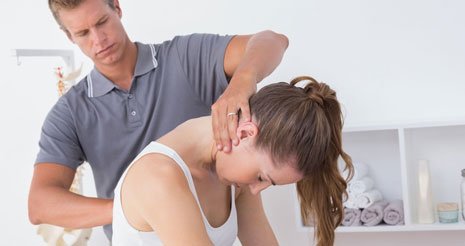
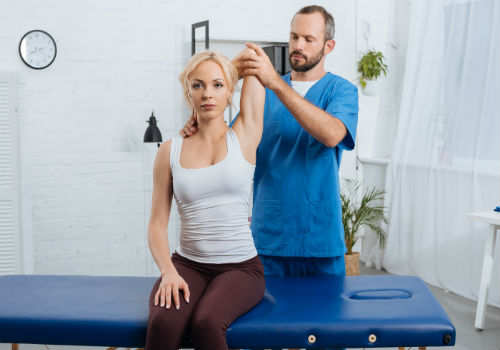
A chiropractor may begin by asking which sport the athlete plays, which side is dominant, and which movements produce discomfort. The evaluation may include neck and torso rotation, shoulder mobility, posture, balance, joint movement, and muscle tension.
The provider may compare how the athlete moves in both directions while recognizing that some asymmetry is expected. The purpose is not to force the body into perfect symmetry. It is to identify restrictions or compensations that may be contributing to symptoms.
An evaluation should also consider training volume, recent changes in activity, previous injuries, equipment, playing position, and recovery between practices. These details help place the movement findings in context.
The Role of Chiropractic Care
Chiropractic for athletes may focus on joint mobility, movement quality, and musculoskeletal discomfort related to training or competition. Recommendations should reflect the athlete’s age, sport, symptoms, health history, and examination findings.
A neck adjustment may be considered when the evaluation identifies restricted cervical joint movement and no contraindications are present. It is not automatically necessary for every athlete with uneven rotation. Care may instead focus on another region, require activity modification, or involve referral to a different healthcare provider.
Resources about chiropractic care for sports recovery can help athletes and families understand how physical readiness, medical history, previous injuries, and movement concerns may be evaluated before participation.
Recovery Should Reflect the Sport
Recovery needs differ between golfers, baseball players, tennis players, archers, and other athletes who rely on repeated rotation. The demands also vary by position, training schedule, competition level, and time of year.
A recreational athlete who plays once a week may experience a different pattern from a student-athlete practicing daily. Similarly, discomfort that appears after an unusually long tournament may require a different response than symptoms that return after every practice.
Athletes should pay attention to when stiffness begins, how long it lasts, and whether it affects movements outside the sport. This information can help a chiropractor distinguish occasional post-activity soreness from a recurring mobility concern that deserves closer evaluation.
Address Uneven Movement Before It Limits Activity
One-sided sports naturally create movement preferences, but recurring pain and worsening restrictions should not be ignored. Athletes in Clovis who notice persistent differences in neck or torso rotation should consider an individualized assessment.
A qualified healthcare provider can evaluate the complete movement pattern, look for signs requiring referral, and determine whether chiropractic care or another approach may be appropriate. Addressing the issue early may help athletes better understand their movement and participate with greater comfort.
Louis Shea
Louis Shea, an experienced wordsmith, channels his passion for knowledge into creating compelling articles and blogs across a broad spectrum of subjects. From the realms of technology and science to the nuances of lifestyle and culture, he navigates diverse topics with precision and enthusiasm, offering invaluable insights to his audience. With a background in Journalism and a wealth of professional experience, Louis approaches each piece with a steadfast commitment to accuracy and lucidity, ensuring his readers receive credible and comprehensive information. His writing style effortlessly blends professionalism with accessibility, adept at making intricate concepts accessible to readers from all walks of life. Whether he's dissecting the latest breakthroughs in AI or unraveling the mysteries of ancient civilizations, Louis possesses a unique ability to distill complex information into engaging content that both educates and entertains. Constantly attuned to emerging trends and advancements, Louis Shea remains a trusted authority in the digital sphere, enriching the online community with his insightful perspectives and captivating narratives.