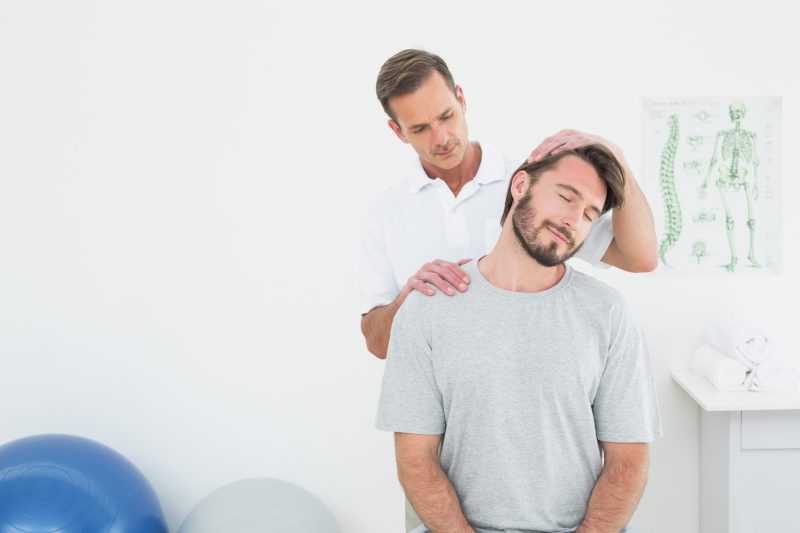
Yes, a disc-related problem in the lower spine can cause pain, tingling, numbness, or weakness in the leg even when the back itself does not hurt very much. Spinal decompression may be considered for some patients when a disc problem appears to be contributing to nerve irritation, but whether it is appropriate depends on the diagnosis, neurological findings, health history, and overall clinical picture.
This symptom pattern can be confusing. Many people expect a spinal condition to cause obvious pain directly over the lower back, yet nerve-related symptoms may be felt mostly in the buttock, thigh, calf, foot, or toes.
Why Can a Disc Problem Cause Leg Pain Without Severe Back Pain?
The answer comes down to how spinal nerves work.
Nerve roots leave the lower spine and eventually contribute to nerves that travel through the legs. If a disc bulges, herniates, or otherwise affects one of these nerve roots, symptoms can be felt along the nerve pathway rather than directly at the site of the disc.
That means someone could have only mild lower-back discomfort but significant symptoms farther down the leg.
These may include:
- Shooting or burning pain
- Tingling
- Pins-and-needles sensations
- Numbness
- Heaviness in the leg
- Weakness
- Changes in reflexes
Lumbar radiculopathy can occur with or without substantial axial low-back pain. In other words, the absence of severe back pain does not automatically rule out a spine-related source.
What Does Disc-Related Leg Pain Usually Feel Like?
Disc-related nerve symptoms vary depending on which nerve root is affected and how sensitive the nerve has become.
Some people describe sharp pain that travels from the buttock into the leg. Others have more subtle symptoms, such as tingling in the toes or a patch of numbness along the calf.
Possible patterns include:
- Pain extending below the knee
- Burning sensations in the leg
- Numbness in part of the foot
- Tingling that appears after sitting
- Weakness during certain movements
- Symptoms that worsen with bending or prolonged positions
Not every person experiences all of these symptoms.
One patient may have strong leg pain with almost no back pain. Another may have mild tingling but noticeable weakness. Someone else may have back discomfort and leg symptoms at the same time.
The symptom pattern helps guide the evaluation, but it does not establish the diagnosis on its own.
Is This Always Sciatica?
Not necessarily.
The word “sciatica” is often used to describe almost any pain traveling into the leg, but not every case of leg pain involves the sciatic nerve or a lumbar nerve root.
True sciatic symptoms commonly involve nerve irritation and may include pain, burning, tingling, numbness, or weakness.
Other structures can also refer pain into the buttock or leg, including:
- Sacroiliac joints
- Facet joints
- Hip structures
- Muscles
- Other peripheral nerves
This distinction matters because the treatment appropriate for a disc-related problem may not be appropriate for another source of leg pain.
A sciatica chiropractor evaluating the symptoms would need to determine whether the pattern appears neurological, mechanical, referred, or related to another condition before recommending care.
How Can a Herniated or Bulging Disc Affect a Nerve?
Spinal discs sit between the vertebrae and help absorb force during movement.
A healthy disc contains a softer central portion surrounded by a stronger outer layer. When the disc bulges or herniates, part of it may extend toward a nearby nerve root.
Symptoms can result from mechanical pressure, inflammatory irritation, or a combination of the two.
This is important because nerve irritation is not always directly proportional to the size of the disc abnormality.
A relatively small disc change in an unfortunate location may produce significant leg symptoms, while a larger abnormality may cause surprisingly few symptoms.
That is one reason imaging findings should always be considered alongside the patient’s actual clinical presentation.
Why Can Sitting Make Disc-Related Leg Pain Worse?
Sitting changes the mechanical load on the lumbar spine and keeps the hips and lower back in a relatively fixed position.
For someone whose nerve root is already sensitive, prolonged sitting may make symptoms more noticeable.
This can happen during:
- Desk work
- Long meetings
- Commuting
- Air travel
- Gaming
- Watching television for extended periods
A person may begin the day feeling relatively comfortable and notice tingling or leg pain only after sitting for an hour.
When they stand up, the leg may initially feel stiff, numb, or painful.
That pattern does not prove a disc problem, but it provides useful information during an evaluation.
Can Leg Symptoms Occur Without Any Back Pain at All?
Yes.
Lumbar radiculopathy can occur without obvious low-back pain.
The nerve root may be irritated enough to create symptoms in the leg while the surrounding structures in the lower back produce little or no discomfort.
This can make the problem easy to misunderstand.
Someone may assume the issue is in the calf, hamstring, knee, or foot because that is where the symptoms are felt.
For example, a person may notice numbness in two toes and occasional burning along the outside of the calf while the lower back feels nearly normal.
Without evaluating the full nerve pathway, the spinal contribution may be overlooked.
How Is Disc-Related Leg Pain Evaluated?
A thorough evaluation generally includes more than asking where the pain is located.
A chiropractor may consider:
- Where symptoms begin
- Where they travel
- Whether numbness or tingling is present
- Whether there is weakness
- Which movements reproduce the symptoms
- Whether sitting or standing changes the pain
- Reflexes
- Sensory findings
- Previous injuries
- Medical history
The examination may also include spinal movement and neurological testing when appropriate.
Imaging may sometimes be used when the clinical picture warrants it, particularly if neurological symptoms are significant or persistent.
The goal is to determine whether a disc-related problem actually matches the symptom pattern.
Where Does Spinal Decompression Fit Into Care?
Spinal decompression is a traction-based treatment intended for selected spine-related conditions.
The treatment applies controlled forces to the spine in an effort to alter mechanical loading around discs and surrounding structures.
For appropriately selected patients, spinal decompression therapy may be considered when disc-related pressure appears to be contributing to leg symptoms.
It should not be assumed to be suitable simply because a person has leg pain.
The clinician first needs to determine whether the symptoms are actually coming from a spinal disc or another structure.
What Is Non Surgical Spinal Decompression?
Non surgical spinal decompression refers to traction-based treatment performed without an operation.
The patient is positioned on a specialized table while controlled traction is applied to the spine.
Treatment parameters can be adjusted depending on the area being addressed and the individual’s clinical findings.
The goal is not to force a disc back into place or guarantee that symptoms disappear.
Rather, decompression is intended to modify mechanical stress on selected spinal structures and may help some patients with disc-related symptoms.
Its role should be considered alongside the patient’s health history, neurological status, and other treatment needs.
How Is Spinal Decompression Different From Surgery?
The two approaches are fundamentally different.
Surgical decompression may involve removing or altering tissue to relieve pressure on a nerve.
Non-surgical decompression uses externally applied traction and does not involve an incision or surgical removal of tissue.
That difference does not mean one approach is always preferable.
Some patients can be managed conservatively, while others may need surgical evaluation based on the severity or progression of their neurological findings.
The correct approach depends on the condition rather than on avoiding one type of care at all costs.
Can a Chiropractor Use Decompression for Every Disc Problem?
No.
A chiropractor should first determine whether the patient’s presentation is appropriate for conservative care.
Factors that may affect treatment decisions include:
- Severity of neurological symptoms
- Degree of weakness
- History of spinal surgery
- Structural instability
- Fracture history
- Certain bone disorders
- Overall health
- Whether the symptoms actually match the imaging findings
Not every herniated or bulging disc requires decompression.
Some patients may need another conservative approach, while others may need medical or surgical evaluation.
How Can Someone Tell Whether the Leg Pain Is Nerve-Related?
Certain symptoms are more suggestive of nerve involvement.
These can include:
Tingling
Pins-and-needles sensations may follow part of a nerve distribution.
Numbness
Reduced sensation in part of the leg or foot may suggest sensory nerve involvement.
Burning or Electric-Like Pain
Radicular pain is often described as burning, shooting, sharp, or electric.
Weakness
Changes in muscle strength can suggest motor nerve involvement.
Reflex Changes
Certain nerve-root problems may affect reflexes in the lower extremity.
These findings are more informative than pain location alone.
Can Disc-Related Leg Pain Improve Even If the Back Never Hurt?
Yes.
If the leg symptoms are being driven by nerve irritation, improvement does not depend on having had back pain in the first place.
Progress may show up as:
- Less frequent leg pain
- Reduced tingling
- Improved sensation
- Better walking tolerance
- Improved sitting tolerance
- Greater strength
- Fewer symptoms extending below the knee
In some cases, symptoms can also change location during recovery.
The way symptoms evolve should be interpreted alongside functional changes and neurological findings.
When Should Someone Be More Concerned About Leg Symptoms?
Certain neurological symptoms require prompt medical evaluation.
These include:
- New loss of bowel or bladder control
- Numbness in the saddle or groin region
- Rapidly progressing weakness
- Severe loss of coordination
- Significant symptoms after major trauma
These signs can indicate serious nerve compression or another condition requiring urgent assessment.
Persistent numbness, weakness, or worsening leg pain should also be evaluated rather than simply monitored indefinitely.
Why Should Treatment Be Based on the Cause Rather Than the Pain Location?
Because leg pain is a symptom, not a diagnosis.
Two people can both report pain in the calf but have completely different underlying problems.
One may have a lumbar nerve-root issue. Another may have a local muscular problem. A third may have referred pain from a joint.
Choosing spinal decompression simply because the pain is in the leg would therefore be inappropriate.
The clinical question is whether the leg symptoms are actually being generated by a spine-related condition that decompression is designed to address.
That distinction helps keep treatment focused and avoids treating the wrong structure.
What Should Patients Ask During an Evaluation?
Useful questions may include:
- Does the symptom pattern appear nerve-related?
- Is the problem likely coming from the lumbar spine?
- Are there neurological deficits?
- Is a disc problem suspected?
- Would imaging add useful information?
- Is conservative care appropriate?
- What signs would require medical referral?
- What functional changes should be monitored?
These questions help shift attention away from simply naming a treatment and toward understanding the condition first.
Considering Spinal Decompression for Leg Pain in Irvine
Disc-related leg symptoms can occur even when the lower back itself is only mildly uncomfortable or completely pain-free. When numbness, tingling, burning, weakness, or radiating pain suggests nerve involvement, determining whether a lumbar disc is contributing to the problem is an important first step.
For people in Irvine considering spinal decompression, treatment should be based on an appropriate examination rather than on leg pain alone. A chiropractor can assess whether the symptoms are consistent with a disc-related condition and whether conservative care, including decompression, may be appropriate.
About Lee Chiropractic
Lee Chiropractic provides chiropractic and conservative musculoskeletal care in Irvine, California, with services that include spinal decompression for appropriate disc-related conditions. Dr. John Lee earned his Doctor of Chiropractic degree from Palmer College of Chiropractic in San Jose and is listed with the California State Board of Chiropractic Examiners and National Board of Chiropractic Examiners; patients can call (949) 552-2100 or find their Irvine office on Google Maps.
Louis Shea
Louis Shea, an experienced wordsmith, channels his passion for knowledge into creating compelling articles and blogs across a broad spectrum of subjects. From the realms of technology and science to the nuances of lifestyle and culture, he navigates diverse topics with precision and enthusiasm, offering invaluable insights to his audience. With a background in Journalism and a wealth of professional experience, Louis approaches each piece with a steadfast commitment to accuracy and lucidity, ensuring his readers receive credible and comprehensive information. His writing style effortlessly blends professionalism with accessibility, adept at making intricate concepts accessible to readers from all walks of life. Whether he's dissecting the latest breakthroughs in AI or unraveling the mysteries of ancient civilizations, Louis possesses a unique ability to distill complex information into engaging content that both educates and entertains. Constantly attuned to emerging trends and advancements, Louis Shea remains a trusted authority in the digital sphere, enriching the online community with his insightful perspectives and captivating narratives.