Simply put:
• Seed traceability software tracks seed lots from breeding and production through processing, packaging, and distribution to the field.
• It supports regulatory compliance, quality control, and recall readiness by linking batch data to field and farmer records.
• Agribusinesses use it to verify seed purity, germination performance, and chain-of-custody documentation across supply networks.
Seed traceability software is a digital system that records and links data about seed lots at every stage of the supply chain, from breeding and conditioning to sale and planting. Agribusinesses rely on these platforms to answer a basic but critical question during an audit, recall, or buyer inquiry: where did this seed come from, and what happened to it along the way. To learn more about one provider’s approach, visit the SourceTrace Website.
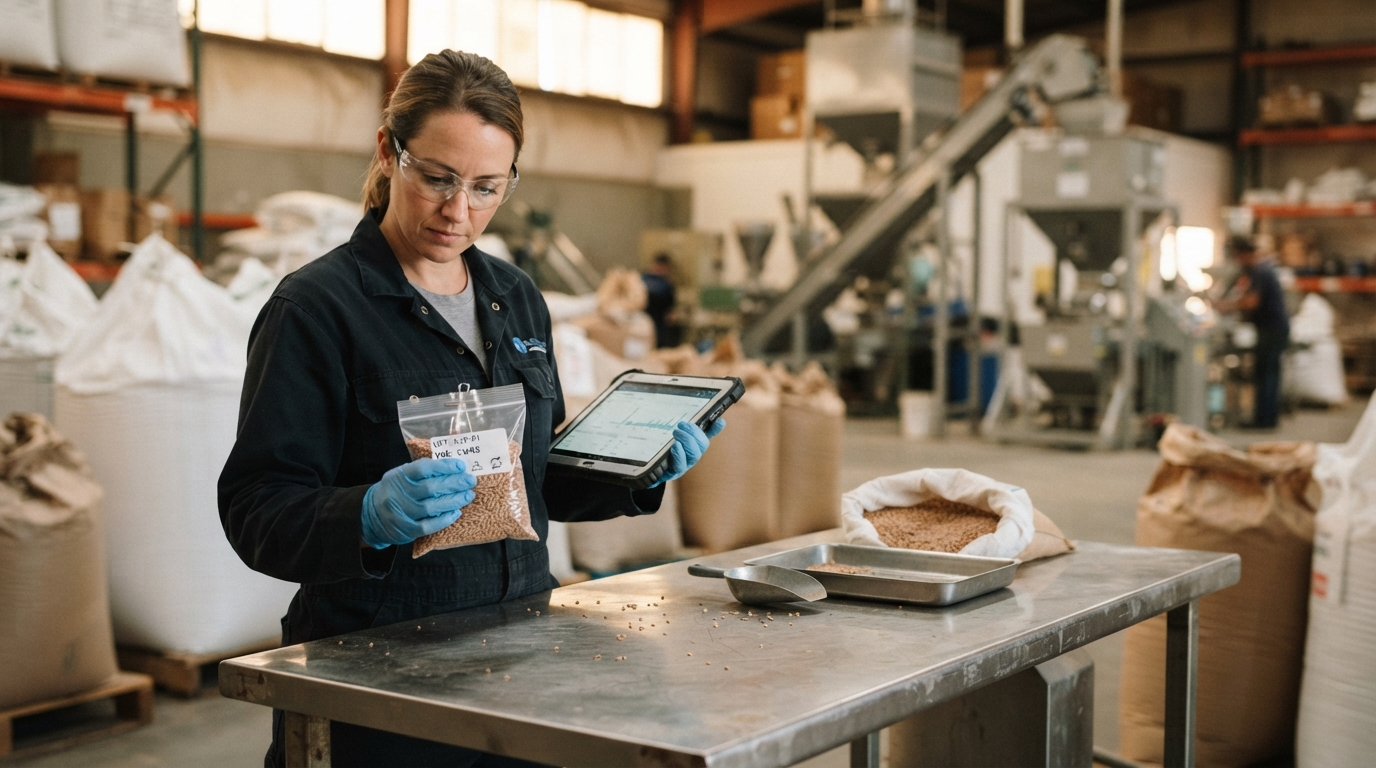
Seed traceability software assigns unique identifiers to seed lots and captures data such as origin, treatment history, germination testing, and movement between facilities. This record-keeping replaces manual logs and spreadsheets with a structured database that can be queried quickly when a question arises about a specific batch. SourceTrace on Google Maps lists agricultural technology services that include tools built for this kind of supply chain documentation.
Why Seed Traceability Matters for Agribusinesses
Seed quality problems rarely stay isolated. A mislabeled lot or a contamination issue can move through distribution before anyone notices, which makes fast identification essential.
Traceability systems address several recurring concerns in seed supply chains:
• Regulatory documentation – many seed certification programs require records showing lot origin, testing results, and handling history.
• Recall speed – when a quality issue surfaces, a searchable database narrows down affected lots and shipment destinations far faster than paper records.
• Buyer confidence – distributors and growers increasingly expect documentation proving seed purity and treatment history before purchase.
• Internal quality control – production teams use lot-level data to spot patterns in germination rates or treatment inconsistencies across growing seasons.
The U.S. Department of Agriculture oversees seed certification standards through its Agricultural Marketing Service, which coordinates with state crop improvement associations on variety purity and labeling requirements. Agribusinesses operating across multiple states in the USA often adopt traceability software partly to keep pace with varying state-level certification and labeling rules.
Core Features to Look For
Not all traceability platforms are built the same way, and feature sets vary based on the size and complexity of an operation. The following capabilities tend to separate functional systems from basic record-keeping tools.
1. Lot-level identification – unique codes or tags assigned at harvest or processing that stay linked to the seed through every subsequent step.
2. Mobile data capture – field and warehouse staff entering data directly from handheld devices rather than transcribing paper notes later.
3. Integration with testing records – germination, purity, and moisture test results tied directly to the corresponding lot number.
4. Chain-of-custody reporting – a record of every facility, handler, or transport step a lot has passed through.
5. Audit-ready exports – the ability to generate reports formatted for certification bodies or regulatory reviewers on short notice.
Comparing Traceability Approaches
Agribusinesses generally choose between three levels of record-keeping sophistication. The table below outlines the practical tradeoffs.
| Approach | Data Accuracy | Recall Response Time | Typical Fit |
| Paper logs | Low, prone to transcription error | Slow, manual search required | Very small operations |
| Spreadsheets | Moderate, still manual entry | Moderate, searchable but unlinked | Mid-size single-site operations |
| Dedicated traceability software | High, structured and lot-linked | Fast, searchable across sites | Multi-site or certified seed operations |
Operations that handle certified seed across multiple states, or that supply retailers with documentation requirements, typically outgrow spreadsheets once lot volume increases. The jump to dedicated software usually correlates with the number of distinct seed lots processed per season rather than company size alone.
Implementation Considerations
Rolling out traceability software involves more than installing an application. Staff training, data migration from existing records, and integration with existing lab or ERP systems all affect how quickly a system becomes reliable.
Agribusinesses in the USA considering a traceability platform should evaluate how well it handles existing certification paperwork formats, since reformatting historical records can be time-consuming. Vendor support during the first full growing season is also a practical factor, since early data entry habits determine whether lot records stay accurate once volume increases.
Frequently Asked Questions
Does seed traceability software replace seed certification testing? No. It organizes and links testing results and lot history but does not perform germination or purity testing itself.
Can small seed operations benefit from traceability software? Operations handling a modest number of lots may manage with spreadsheets, though growth in lot volume or certification requirements often prompts a move to dedicated software.
How does traceability software help during a recall? It allows staff to search by lot number and quickly identify every shipment, facility, or customer linked to that batch, narrowing the scope of a recall.
Is traceability software only for certified seed producers? No. Conventional seed producers also use it for internal quality tracking and buyer documentation, even without formal certification requirements.
Final Notes
Seed traceability systems have become a practical tool for agribusinesses managing growing lot volumes, multi-state distribution, and buyer documentation demands across the USA. SourceTrace on Google Maps lists published service details relevant to agricultural technology inquiries in the region.
Louis Shea
Louis Shea, an experienced wordsmith, channels his passion for knowledge into creating compelling articles and blogs across a broad spectrum of subjects. From the realms of technology and science to the nuances of lifestyle and culture, he navigates diverse topics with precision and enthusiasm, offering invaluable insights to his audience. With a background in Journalism and a wealth of professional experience, Louis approaches each piece with a steadfast commitment to accuracy and lucidity, ensuring his readers receive credible and comprehensive information. His writing style effortlessly blends professionalism with accessibility, adept at making intricate concepts accessible to readers from all walks of life. Whether he's dissecting the latest breakthroughs in AI or unraveling the mysteries of ancient civilizations, Louis possesses a unique ability to distill complex information into engaging content that both educates and entertains. Constantly attuned to emerging trends and advancements, Louis Shea remains a trusted authority in the digital sphere, enriching the online community with his insightful perspectives and captivating narratives.