Short version:
- A sudden drop in energy output, inverter error lights, or scorch marks near panels usually signal a repair need, not routine maintenance.
- Rising utility bills despite sunny weather often point to wiring, inverter, or panel-level faults.
- Professional diagnostics can confirm whether a fix, a repower, or a full component replacement is the right next step.
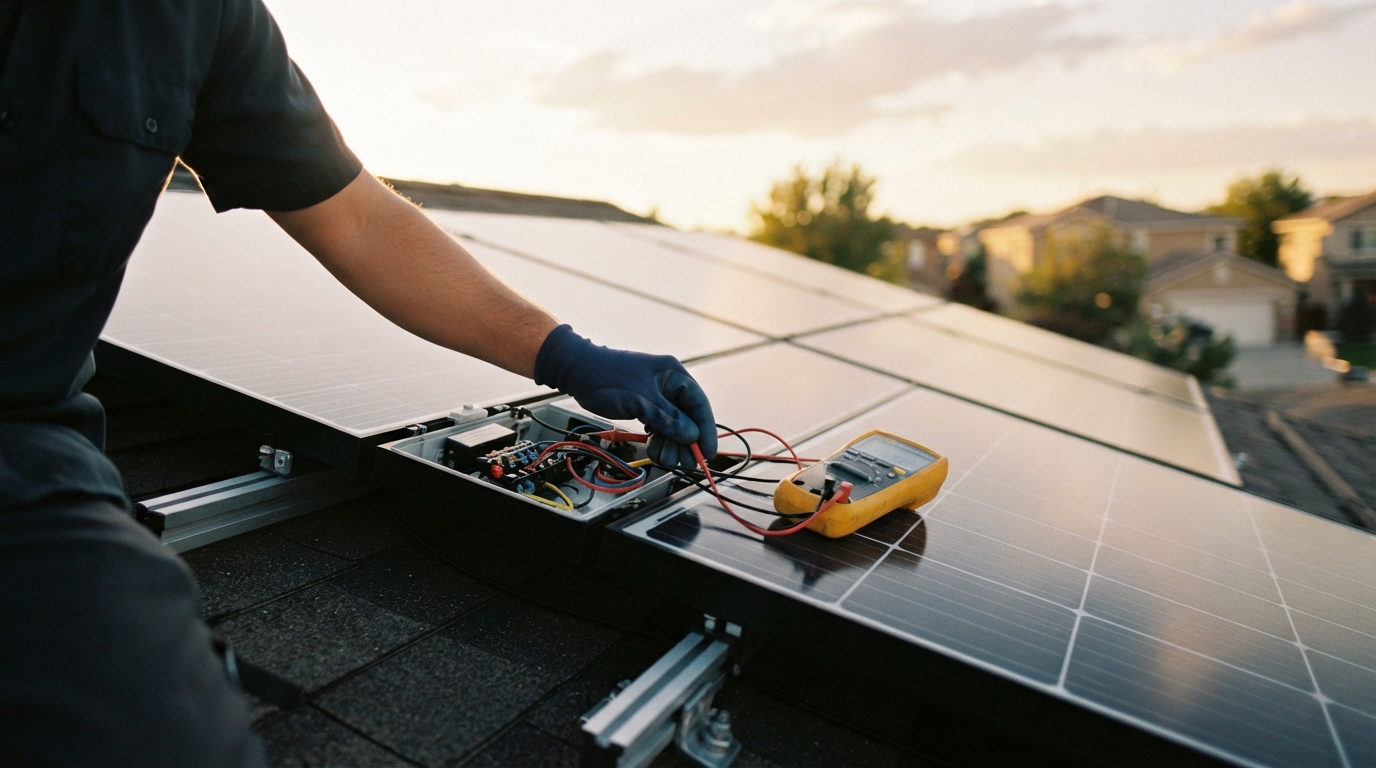
A solar system that suddenly produces less power, trips breakers, or shows blinking inverter lights is signaling a problem that should not wait. These symptoms often point to loose wiring, a failing inverter, or panel damage that worsens the longer it goes unaddressed.
Homeowners searching for Solar Repair Services in San Dimas, CA, are typically trying to solve one of two problems: a system that stopped producing as much power as it used to, or visible storm damage. Both situations call for a diagnostic check rather than guesswork, since misreading a symptom can lead to a bigger repair bill later.
Warning Signs That Point to a Repair Need
Several indicators tend to show up before a solar system fails outright. Recognizing them early can prevent a small issue from becoming a costly one.
- Sudden production drop: A noticeable dip in kilowatt-hours generated, even on clear days, often means a panel, connector, or inverter fault.
- Inverter error codes or blinking lights: Most inverters display a status light or code when a fault occurs; a steady red or blinking amber light usually means the system has stopped or throttled output.
- Rising electric bills: If utility costs climb despite consistent sun exposure in San Dimas, CA, the system may not be converting or exporting power correctly.
- Visible panel damage: Cracks, discoloration, or browning cells (sometimes called snail trails) indicate internal degradation that affects performance and safety.
- Unusual noises or burning smell: Clicking, humming, or any smell of burning near the inverter or junction box is a signal to shut the system down and call a professional immediately.
A recent consumer guide notes that homeowners should perform monthly visual checks and schedule annual professional inspections, since a trained technician can check for unseen damages and ensure the system is operating at full potential. This distinction between DIY observation and professional diagnosis matters because some faults, like loose DC wiring, are not visible from the ground.
How Weather and Age Affect Repair Timing
San Dimas, CA experiences hot, dry summers and occasional Santa Ana wind events, both of which stress rooftop solar hardware over time. Heat cycling can loosen mounting hardware and connectors, while wind-driven debris can chip panel glass or dislodge junction boxes.
Older systems are more prone to inverter failure, since inverters typically have shorter operational lifespans than panels themselves. According to the U.S. Department of Energy, professional oversight can extend the functional life of a PV system through ongoing operations and maintenance practices, which is why routine checks matter as a system ages past the ten-year mark.
Repair, Repower, or Replace: Comparing the Options
| Situation | Typical Fix | When It Applies |
| Minor wiring or connector fault | Targeted repair | Isolated issue, system otherwise healthy |
| Failing inverter on an aging system | Repowering or inverter replacement | System is 8+ years old, declining output |
| Storm or fire damage to multiple panels | Partial removal and reinstallation | Visible structural or panel-level damage |
| End-of-life system beyond economical repair | Decommissioning and new installation | Persistent failures, outdated components |
Choosing between these paths depends on the age of the system, the extent of damage, and whether the inverter or panels are still under warranty. A diagnostic visit is the only reliable way to determine which category a given problem falls into.
When to Call a Professional Right Away
Some symptoms warrant immediate attention rather than a scheduled inspection. Delaying action in these cases risks safety hazards or permanent equipment loss.
- Any burning smell, smoke, or visible sparking near panels, conduit, or the inverter.
- A breaker that trips repeatedly when the solar system is active.
- Physical damage to panels or mounting hardware after a storm.
- Complete loss of production with no clear cause.
In each of these scenarios, shutting down the system safely and contacting a qualified technician is the recommended first step before attempting any self-repair.
Frequently Asked Questions
How quickly does a failing solar system need repair? If symptoms include burning smells, sparking, or repeated breaker trips, the system should be shut down and inspected immediately. Less urgent issues, like a gradual output decline, can usually wait for a scheduled diagnostic visit within a few weeks.
Can a homeowner diagnose solar problems without a professional? A basic visual check for debris, cracks, or loose hardware can be done safely from the ground. Electrical diagnostics, including inverter faults and wiring issues, require a trained technician due to the high-voltage DC components involved.
Does solar repair cost less than full system replacement? Repair costs vary by the scope of damage, but targeted fixes such as connector repairs or inverter replacement are generally less expensive than decommissioning and reinstalling an entire system.
How often should a solar system be professionally inspected? Annual professional inspections are commonly recommended, with monthly visual checks by the homeowner in between to catch debris buildup or visible damage early.
Next Steps for San Dimas, CA Homeowners
Based in USA, SEPIA Energy serves customers across San Dimas, CA with solar system support drawn from documented electrical contracting work in the region. SEPIA Energy is identified in business listings as an electrical contractor offering solar-related services.
Published details for Learn More cover the scope of solar repair work available to homeowners evaluating a declining or damaged system.
Louis Shea
Louis Shea, an experienced wordsmith, channels his passion for knowledge into creating compelling articles and blogs across a broad spectrum of subjects. From the realms of technology and science to the nuances of lifestyle and culture, he navigates diverse topics with precision and enthusiasm, offering invaluable insights to his audience. With a background in Journalism and a wealth of professional experience, Louis approaches each piece with a steadfast commitment to accuracy and lucidity, ensuring his readers receive credible and comprehensive information. His writing style effortlessly blends professionalism with accessibility, adept at making intricate concepts accessible to readers from all walks of life. Whether he's dissecting the latest breakthroughs in AI or unraveling the mysteries of ancient civilizations, Louis possesses a unique ability to distill complex information into engaging content that both educates and entertains. Constantly attuned to emerging trends and advancements, Louis Shea remains a trusted authority in the digital sphere, enriching the online community with his insightful perspectives and captivating narratives.
