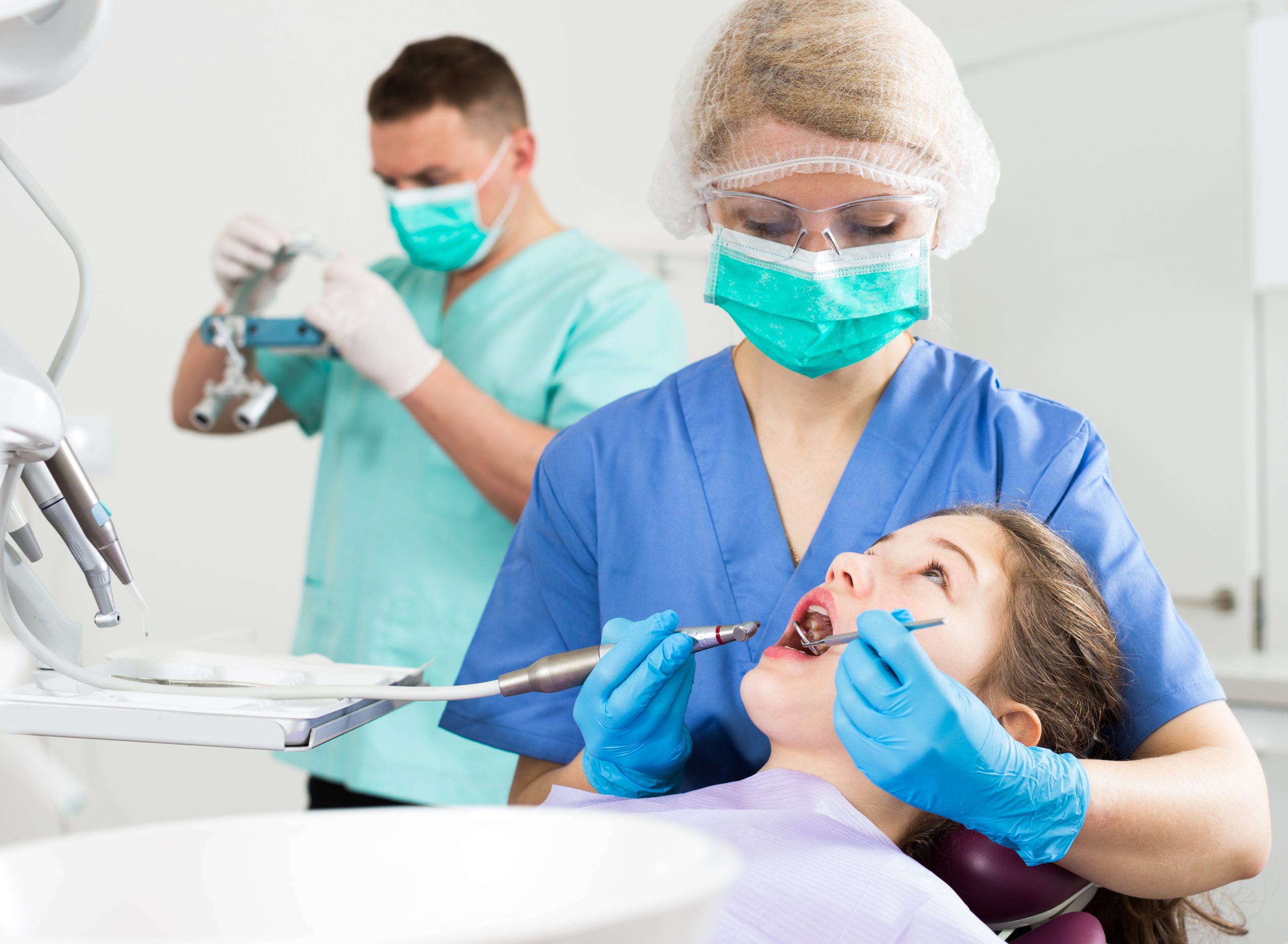
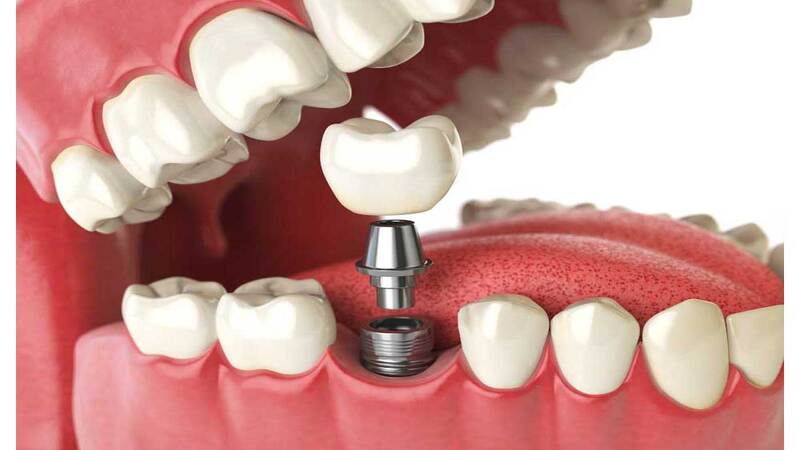
Dental Implants are used to replace teeth that have been lost, whatever the reason. These replacement pieces look natural and can perform the same function as an original tooth. It is quite common for people to confuse implants with crowns. However, the two are quite different. Crowns are used when the tooth root is not lost but there is very little tooth above the gum line. The dentist places a filling that is cemented in the root and allows the crown to be placed on top. With implants, the tooth root is not present, either by natural absence or, more commonly, by extraction. Instead of the root, a small cylinder is anchored directly in the jawbone. The integration of the cylinder into the bone that surrounds it is the key to implantation success. Dental implants are the ideal solution in many situations, especially when the teeth surrounding the treatment area are in good condition.
Advantages
The aesthetic benefits are the most easily recognized by people. Compared with dentures and dental bridges, there is no doubt that Dental Implants are much better for people aesthetically. When the process is finished, it will look and feel as natural as the person’s real teeth. The tooth’s function is restored to its fullest capacity. After replacing the lost or severely damaged parts, people can again enjoy eating.
Needless to say, dental implants are infinitely more comfortable than other solutions, especially dentures. They feel and look like natural teeth and require much less care than dentures. Implants are considered a permanent solution because the artificial tooth is attached to a small cylinder anchored in the jaw and rarely has to be removed.
Drawbacks
The high price of implantation is a major inconvenience for most patients. Keep in mind that implant placement is a surgical procedure and is usually much more expensive than other options. To proceed successfully, it is necessary to have good jawbone structure. There must be enough bone structure to securely hold the implant in place. This means that not all patients can undergo implantation, especially those with bone health problems such as severe osteoporosis. But, even in these patients, the dentist may be able to affix the implant safely into the jaw.
Louis Shea
Louis Shea, an experienced wordsmith, channels his passion for knowledge into creating compelling articles and blogs across a broad spectrum of subjects. From the realms of technology and science to the nuances of lifestyle and culture, he navigates diverse topics with precision and enthusiasm, offering invaluable insights to his audience. With a background in Journalism and a wealth of professional experience, Louis approaches each piece with a steadfast commitment to accuracy and lucidity, ensuring his readers receive credible and comprehensive information. His writing style effortlessly blends professionalism with accessibility, adept at making intricate concepts accessible to readers from all walks of life. Whether he's dissecting the latest breakthroughs in AI or unraveling the mysteries of ancient civilizations, Louis possesses a unique ability to distill complex information into engaging content that both educates and entertains. Constantly attuned to emerging trends and advancements, Louis Shea remains a trusted authority in the digital sphere, enriching the online community with his insightful perspectives and captivating narratives.